

15th Nov 2025
10 ways to make your commercial kitchen more energy efficient
For cafés, restaurants, and food producers, energy bills can eat into profits faster than almost any other cost. The good news is that saving energy doesn’t always require expensive overhauls. Small, consistent changes can make a big difference right away.
These ten steps will help any commercial kitchen run more efficiently, reduce waste, and protect profits.
-
Know where your energy is going
Start with an energy audit. Identify which appliances use the most power and how often they’re running. In most kitchens, refrigeration and cooking equipment account for over 70% of total energy use. Understanding that split helps you focus your efforts where they matter most.
Herits insight: The first step to saving money is measuring where it’s being spent. Even a simple meter reading log can reveal big opportunities.
-
Maintain your equipment
A well-maintained kitchen is a more efficient one. Clean filters, descale kettles, replace worn seals, and check thermostat accuracy. Dirt and build-up make appliances work harder and consume more energy.
Schedule regular maintenance for fryers, ovens, and refrigerators. Equipment that runs smoothly consumes less power and lasts longer.
-
Upgrade to energy efficient appliances
Older models can waste up to 40% more energy than newer versions. When it’s time to replace equipment, look for energy efficient commercial kitchen appliances certified by manufacturers for reduced consumption.
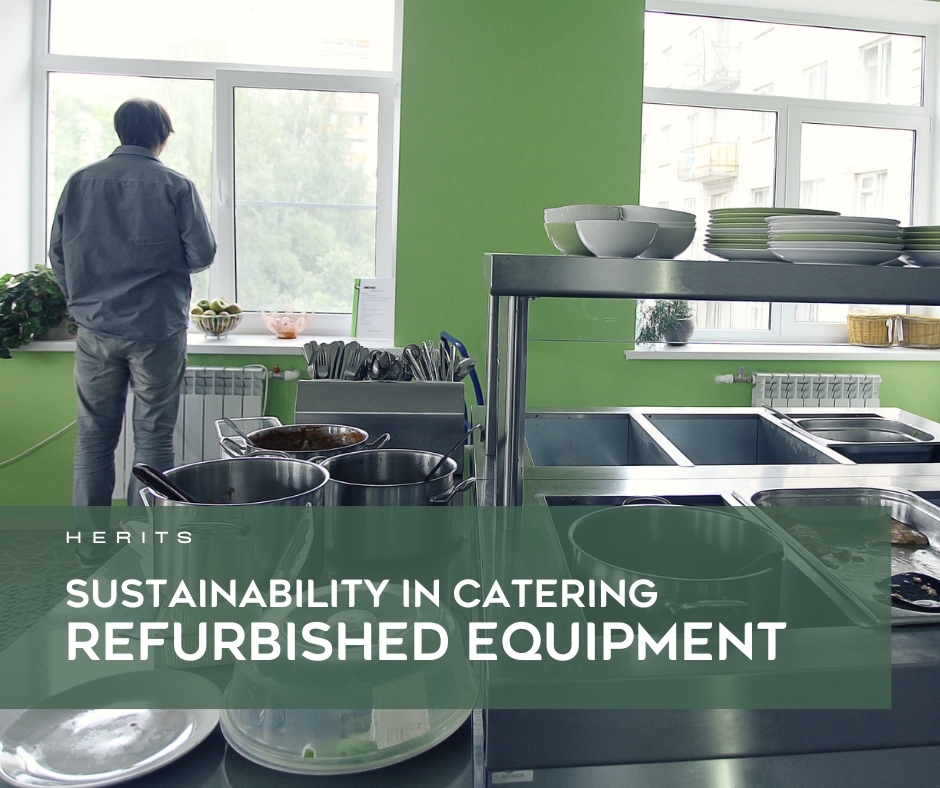
Refurbished units that have been professionally tested and serviced can deliver the same performance and reliability as new models at a fraction of the cost.
READ THE GUIDE: SUSTAINABILITY IN CATERING
-
Control your temperatures
Avoid running fridges colder than necessary. Every degree below the recommended temperature can increase energy use by up to 5%. Set freezers to around -18°C and fridges to between 1°C and 4°C.
Likewise, check that ovens and fryers aren’t being preheated unnecessarily early. Staff often turn appliances on hours before service begins, wasting energy before a single order is placed.
-
Improve your ventilation
Your extraction system plays a big role in energy use. Poor airflow forces equipment to work harder and makes kitchens hotter, increasing cooling demand. Clean filters weekly and ensure airflows are balanced.
Where possible, install variable speed fans that adapt to demand, lowering energy use during quieter periods.
-
Use smart scheduling
Plan your cooking to minimise idle times. Group tasks that require similar temperatures or equipment types. Avoid leaving machines on standby for long periods between orders.
Smart scheduling also applies to cleaning and prep. Shutting down sections during off-peak hours helps reduce unnecessary power consumption.
-
Check seals and insulation
Heat loss from ovens and cold air leakage from fridges are common sources of waste. Inspect door seals, gaskets, and insulation regularly. Replace any that are damaged or loose.
Proper insulation helps maintain stable temperatures and reduces strain on compressors and heating elements.
-
Use energy-efficient lighting
Switching to LED lighting is one of the simplest, fastest returns on investment you can make. LEDs use up to 80% less energy and produce less heat, which keeps your kitchen cooler and reduces the load on ventilation systems.
Install motion sensors in storage areas and corridors to prevent lights from being left on unnecessarily.
-
Train your staff
Energy efficiency is a team effort. Train your staff to switch off equipment that isn’t in use, close fridge doors promptly, and report leaks or faults immediately.
When staff understand how small actions affect costs, they’re more likely to take ownership.
Herits insight: The most efficient kitchens aren’t just about equipment, they’re about culture. Awareness saves energy as much as technology does.
-
Reassess regularly
Energy efficiency isn’t a one-off project. Review your energy use every quarter and track improvements. Keep notes on equipment performance and service intervals.
By regularly reviewing your energy data, you’ll spot trends, catch faults early, and prove the value of your efforts in hard numbers.
We are here to help
At Herits, we help commercial kitchens improve energy performance through tested, refurbished catering equipment that delivers reliable results and lower running costs.
Call 01803 501066 to talk to our team about upgrading your kitchen with energy-efficient solutions that save power, time, and money.